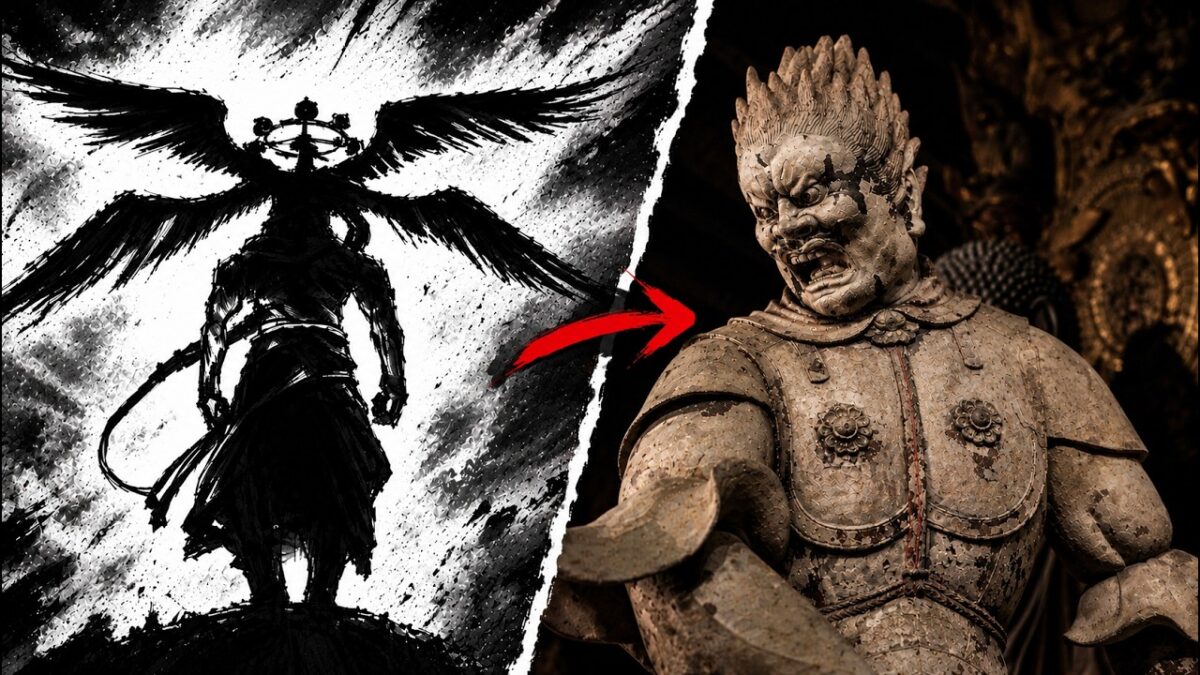
Everyone calls him Mahoraga. That’s not his name in the original Japanese — the real one leads to a god almost nobody knows, and a 1,200-year-old resurrection ritual.
The strongest shikigami in Jujutsu Kaisen is named after a real Buddhist guardian you can still go see today, standing in a circle of twelve at a temple in Nara where it was placed over a thousand years ago. His incantation comes from a 9th-century Japanese chronicle. The sword in his title is one of ten sacred treasures from a Shinto rite said to revive the dead. And the adaptation that makes him almost unkillable describes something your own body is doing right now, as you watch this.
This is the real mythology under Megumi’s Ten Shadows — and most of it the fandom has never really told.
CHAPTERS
0:00 Not his real name
0:32 Refresher: the Ten Shadows
1:32 The Twelve Heavenly Generals
2:42 Where “Mahoraga” actually came from
3:24 Furube Yurayura — the incantation is real
4:49 The wheel, and what it’s really describing
SOURCES
Encyclopedia of Shinto, Kokugakuin University — Tokusa-no-Kandakara
Shin-Yakushiji Temple — the Twelve Divine Generals
The Metropolitan Museum of Art — Six of the Twelve Divine Generals
National Institutes for Cultural Heritage, Japan (e-Museum)
National Institute of Japanese Literature — Ten Sacred Treasures
Religions (MDPI) — The Secularization of Religious Figures: Mahoraga
NIH / NIGMS — What Is the Immune System?
NIH — How a Well-Adapting Immune System Remembers
Mythology and lore breakdowns, researched properly. Subscribe if you want the real history sitting under the characters you already know.
#JujutsuKaisen #Mahoraga #JJK #Makora #JujutsuKaisenLore #AnimeMythology #Megumi #Sukuna #AnimeExplained #BuddhistMythology #Shinto